In the onion processing industry, the peeling stage directly impacts product quality, production stability, and overall costs. Selecting the right onion peeler machine hinges on understanding its operating principles, rather than simply comparing prices or superficial specifications.
This article will examine the equipment's structure and core principles to help buyers gain a comprehensive understanding of how onion peeling machines operate, thereby enabling them to make more informed decisions.
Basic Operating Principles of Onion Peeler Machines
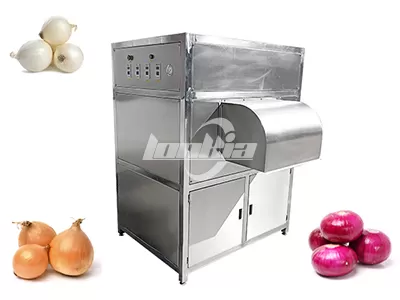
Modern onion peeling machines primarily utilize pneumatic peeling technology. The core logic involves using high-pressure airflow to rapidly strip the outer skin of the onion, rather than traditional methods such as cutting with blades or vigorous friction.
The process can be summarized as follows:
- The onion enters a sealed peeling chamber
- Compressed air creates an instantaneous high-pressure airflow
- The outer dry skin is rapidly stripped away by the impact of the airflow
- The onion remains intact and is discharged
The advantages of this method include: non-contact peeling, low wastage, and high surface integrity, making it highly suitable for subsequent processing requirements.
Core Structural Components of the Onion Peeling Machine
To achieve stable and efficient peeling results, a high-quality onion peeler machine typically includes the following key components:
- Feeding System: Responsible for uniformly feeding onions, preventing accumulation or blockages, and ensuring continuous operation of the equipment.
- Pneumatic Peeling System (Core Component): Comprising an air compressor and a jet nozzle assembly, this is the core module responsible for the peeling action.
- Conveying and Tumbling Mechanism: Utilizing a screw conveyor or roller design, this mechanism continuously tumbles the onions during peeling to enhance uniformity.
- Separation and Discharge System: Employing airflow or vibration, this system separates the outer skin from the onion, ensuring clean and tidy output.
The coordinated operation of these components determines the machine's final peeling performance and stability.
Analysis of the Industrial Onion Peeler Workflow
Understanding the complete process helps determine whether the industrial onion peeler is suitable for your onion ring production line:
- Raw onions are fed into the machine
- The conveying system transports the onions to the peeling zone
- High-pressure airflow rapidly strips away the outer skin
- Onions are continuously flipped during the peeling process
- The outer skin is separated and discharged
- Finished onions proceed to the next process
The entire process operates continuously, significantly reducing manual intervention and improving overall efficiency.
Key Factors Affecting Peeling Performance
In practical use, the performance of the onion peeler machine depends not only on the equipment itself but is also closely related to the following factors:
- Air pressure stability: Insufficient air pressure can result in incomplete peeling, while excessively high pressure may increase waste.
- Feed uniformity: Uneven feeding can easily cause some onions to be peeled incompletely or require reprocessing.
- Condition of the onions: Differences in size and moisture content directly affect peeling results.
Therefore, the onion peeling equipment and operating parameters must be properly matched to achieve optimal performance.
Advantages of Pneumatic Peeling Technology
Compared to traditional methods, pneumatic onion peeler machines offer advantages in several areas:
- Reduced waste: Eliminates waste caused by blade cutting
- Improved appearance quality: Preserves the integrity of the onions
- Increased efficiency: Supports continuous and stable operation
- Reduced reliance on manual labor: Minimizes manual handling steps
These advantages make it the mainstream choice in modern onion processing.
How to Determine if an Onion Peeler Machine Is Reliable?
From a procurement perspective, focus on the following key points:
- Is peeling uniform and consistent?
- Does it have the capability for continuous operation?
- Is the structural design maintenance-friendly?
- Does it support processing of raw materials of different specifications?
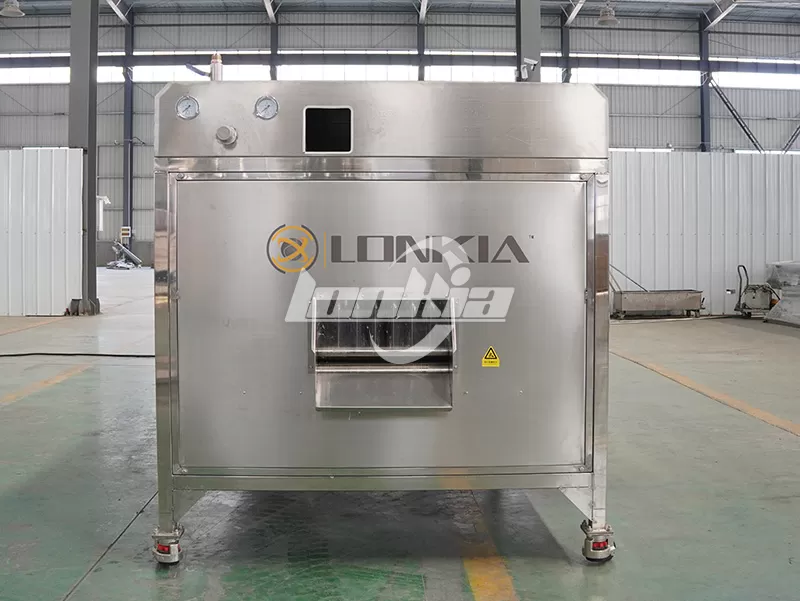
Taking Lonkia's onion peeler equipment as an example, optimizations have been made to the pneumatic system and conveyor structure, making the equipment more stable during actual operation, ensuring more consistent peeling results, and meeting continuous processing demands.
Summary
For purchasers, understanding the working principles of an onion peeler machine is a crucial step in avoiding the selection of the wrong equipment.
Rather than simply comparing prices, it is recommended to focus on:
- Peeling method (whether pneumatic)
- Structural design (whether reasonable)
- Operational stability (whether continuous)
Only by evaluating based on these principles can one truly select equipment suited to their production needs, thereby improving efficiency and controlling costs.