With the sustained growth of the frozen food market, an increasing number of food processing enterprises are investing in automatic French fries production lines. When planning a production line, one of the key concerns for customers is: What production capacity should be selected? Different capacities not only influence equipment configuration but also directly impact production efficiency, investment scale, and future expansion potential. This article will help businesses better understand common capacity configurations from the perspectives of equipment structure and production processes.
Core Equipment Components of a Frozen French Fries Production Line
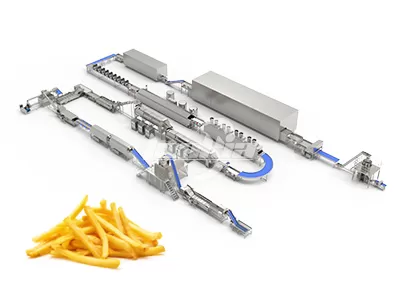
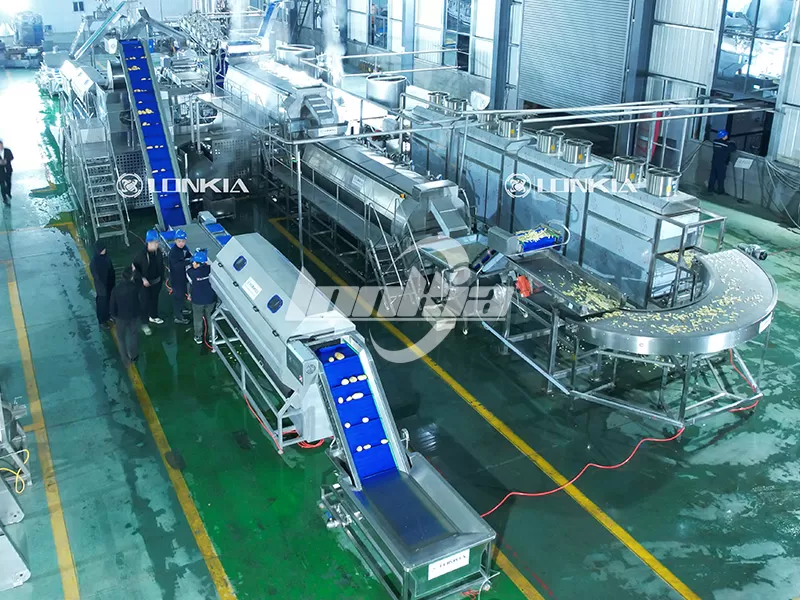
A complete frozen French fries production line typically comprises multiple machines, forming a continuous processing flow from raw potatoes to final frozen packaging. Typical equipment includes:
- Potato Washing and Peeling Machine
- Sorting Conveyor
- French Fries Cutter
- Potato Blanching Equipment
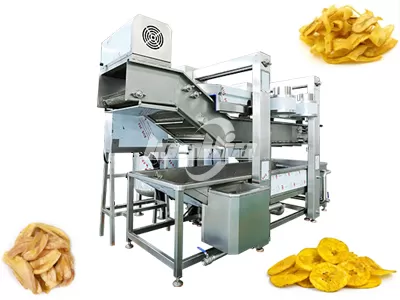
- French Fries Frying Machine
- Oil-Removal and Cooling Equipment
- Quick-Freezing Equipment
- Automatic Packaging Equipment
These units are interconnected via conveyor systems to enable continuous processing, with all steps from washing to quick-freezing completed automatically.
The cutter determines french fry specifications, the fryer controls texture and color, while the quick-freezing equipment ensures rapid freezing within a short timeframe to preserve structure and flavor.
Common Production Capacities: 300kg, 500kg, 1000kg
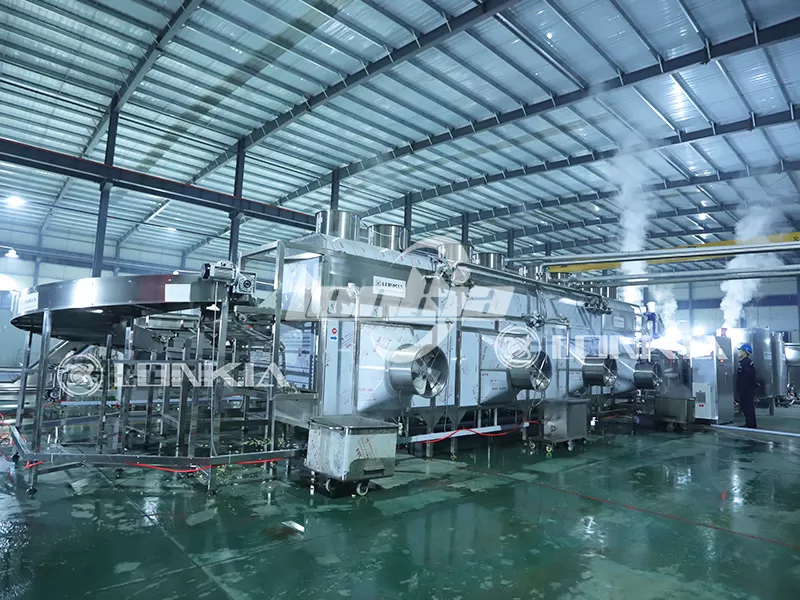
Common frozen French fries line capacities on the market include 300kg/h, 500kg/h, and 1000kg/h. Differences in capacity primarily manifest in equipment dimensions, power requirements, and conveyor system design.
- 300kg/h production line: Features a compact structure with relatively short equipment length, suitable for processors prioritizing production stability with moderate output requirements.
- 500kg/h Production Line: This is the standard configuration adopted by the French fries making machine factory. The complete automatic French fries production line includes washing, cutting, blanching, frying, and quick-freezing equipment, enabling continuous production.
- 1000kg/h Production Line: Features larger equipment structures, with expanded frying systems and quick-freezing equipment, achieving higher-efficiency continuous processing.
In actual production, capacity depends not only on the equipment itself but also closely relates to raw material quality, operational management, and production process control.
How to Select Appropriate Capacity Based on Needs?
When choosing automatic French fries production line capacity, it is recommended to focus on the following factors:
- Raw Material Supply Capacity: A stable potato supply is a crucial prerequisite for ensuring efficient equipment operation.
- Equipment Continuous Operation Capability: Continuous conveying and frying systems can enhance production efficiency and reduce manual intervention.
- Future expansion potential: Some French fries processing lines can increase capacity by adding equipment modules.
Food machinery manufacturers like Lonkia typically customize production line designs based on customer requirements, achieving a better balance between efficiency and stability for the entire line.
Advantages of Automatic French Fries Production Lines
Compared to traditional processing methods, automated frozen French fries lines offer distinct advantages:
- Higher efficiency through continuous production
- More consistent French fry size and quality
- Reduced manual labor
- Greater operational stability
With advances in food processing technology, modern French fry production lines now achieve full automation from raw material handling to quick-freezing packaging.
Conclusion
For enterprises planning to enter the frozen French fries processing industry, selecting the appropriate production capacity for a frozen French fries line is a crucial step in establishing the automatic French fries production line. Understanding the structure and production processes of equipment with different capacities enables more scientific planning of investment and production capabilities.
If a company seeks a more stable and efficient production solution, choosing a mature equipment supplier and implementing a reasonable configuration will help improve production efficiency and reduce long-term operating costs.