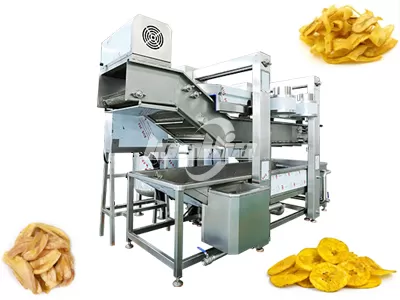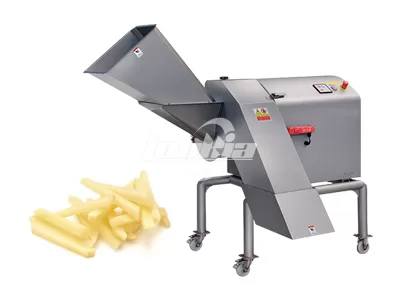
In many countries, chicharrones are a very popular snack known for their crispiness, fluffiness, and rich aroma. As market demand continues to grow, an increasing number of food processing companies are adopting automated pork skin frying lines to achieve stable and efficient industrial-scale production. Compared to traditional manual frying, automated production lines not only increase output but also ensure consistent texture and quality.
For companies looking to enter the chicharrones processing market, selecting a reliable production system is key to success.
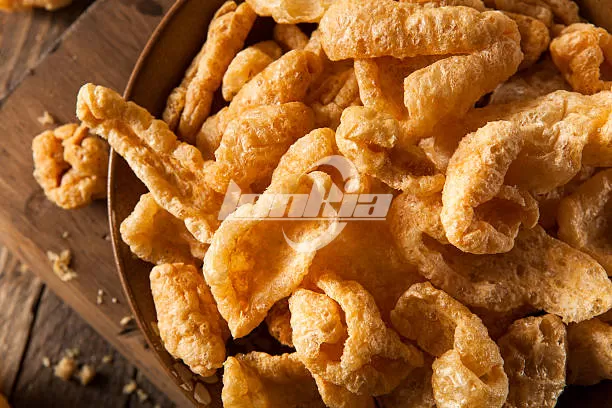
The Core Equipment for Chicharrones Production: The Pork Skin Frying Line
Within the entire pork skin production line, the continuous frying equipment is the most critical component. The pork skin rapidly puffs up in high-temperature oil, causing the internal moisture to vaporize quickly and forming a light, crispy texture—resulting in the characteristic chicharrones crunch.
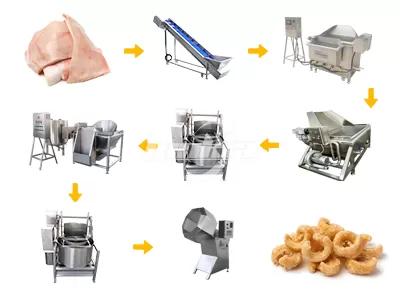
A complete pork skin frying production line typically includes the following key equipment:
- Pork Skin Cutter
- Pre-processing Equipment (washing, boiling, etc.)
- Dehydration Equipment
- Continuous Fryer
- Oil-Removal Machine
- Cooler
- Seasoning Machine
These pork skin making machines are connected via an automated conveyor system, forming a continuous production process that significantly reduces manual labor and improves production stability.
Food machinery manufacturers like Lonkia typically provide customized production line solutions based on customers’ output requirements and factory layouts, ensuring more efficient integration between equipment.
Workflow of the Pork Skin Porcessing Line
To produce crispy and uniform chicharrones, every step of the production process must be strictly controlled. The typical process includes:
- Raw Material Processing: The pork skin is first washed and pre-treated to remove impurities and adjust its thickness, ensuring more uniform processing in subsequent stages.
- Softening and Cutting: The pork skin is heated to soften it before being cut into appropriate sizes. This step ensures consistent frying and puffing results.
- Dehydration: Reducing the moisture content of the pork skin shortens frying time while enhancing the puffing effect.
- Continuous Frying: The pork skin enters a continuous fryer, where it rapidly puffs up in high-temperature oil, forming a golden-brown, crispy texture.
- Oil Removal and Cooling: Excess oil is removed using centrifugal or vibrating oil-removal equipment, followed by rapid cooling to stabilize the product's structure.
- Seasoning: Finally, salt or spices are evenly sprayed onto the product using seasoning equipment, creating a variety of flavors.
Key Equipment Requirements for High-Quality Pork Skin Crisp Production
For food processing plants, an excellent pork skin frying line typically requires the following features:
- Precise Temperature Control: Frying temperature directly affects the puffing effect and color of the pork skin; therefore, the equipment is usually equipped with a digital temperature control system to maintain a stable oil temperature.
- Automatic Conveyor System: An automatic conveyor ensures consistent dwell time for the pork skin in the frying zone, thereby guaranteeing uniform product size and texture.
- Efficient Oil-Removal System: The oil-removal equipment effectively eliminates excess oil, resulting in crispier and drier pork skin.
- Food-Grade Stainless Steel Construction: Production lines are typically manufactured from 304 stainless steel, which is corrosion-resistant, easy to clean, and meets food processing standards.
Why Food Processing Plants Choose Automated Pork Skin Frying Lines
With the growth of the snack food market, automated production equipment is becoming a key investment focus for food processing companies.
- An automated pork skin frying line can help enterprises:
- Achieve continuous production
- Improve product quality consistency
- Reduce labor costs
- Increase production efficiency
For example, the pork skin processing production line provided by Lonkia enables multiple machines to work in coordination, creating a complete production process from raw material handling to seasoning and packaging, thereby helping food companies establish stable pork skin crisp production capacity more quickly.
Conclusion
For food processing companies aiming to produce high-quality chicharrones, a stable and efficient pork skin frying line is key to achieving large-scale production.
By optimally configuring cutting, frying, oil-draining, and seasoning equipment, companies can not only boost production efficiency but also ensure the crispy texture and visual quality of the pork skin snacks.
With the continuous advancement of automation technology, modern pork skin frying production lines are helping an increasing number of food companies enter this rapidly growing snack food market and create competitive products.