When purchasing a vacuum fryer, simply reviewing the equipment specifications and price quote is not enough to determine whether the machine is truly suitable for your specific products. This is especially true for ingredients such as bananas, mangoes, pineapples, jackfruit, sweet potatoes, and yams, which have varying moisture content, sugar levels, and tissue structures—and thus require different levels of vacuum, oil temperature, and frying time. Therefore, conducting raw material testing before formal procurement is a crucial step in confirming the vacuum deep fryer's suitability.
Confirming Whether the Equipment Meets Raw Material Processing Requirements
We recommend that customers conduct test runs using the actual raw materials planned for production whenever possible, rather than relying solely on standard samples provided by the supplier. During testing, record the type of raw material, ripeness, slice thickness, and batch load size, as these factors all influence the final results.
For fruit and vegetable chips, special attention should be paid to the color, crispness, shape, moisture content, and residual oil of the finished product to determine whether the vacuum fryer is suitable for subsequent product development.
Testing Vacuum Level and Oil Temperature Control
The core of vacuum frying is not simply "lowering the oil temperature," but rather completing dehydration and frying under a stable vacuum environment. LONKIA equipment operates at temperatures ranging from 80–120°C, with temperature and vacuum levels regulated by an automatic control system.
Key Parameters to Check
The following should be recorded during testing:
- Actual frying temperature and its stability
- Time required to establish vacuum
- Stability of vacuum levels during the frying process
If there are significant fluctuations in temperature or vacuum conditions, even if the initial product results are satisfactory, this may affect consistency across different batches.
Check Oil Circulation, Filtration, and De-oiling Performance
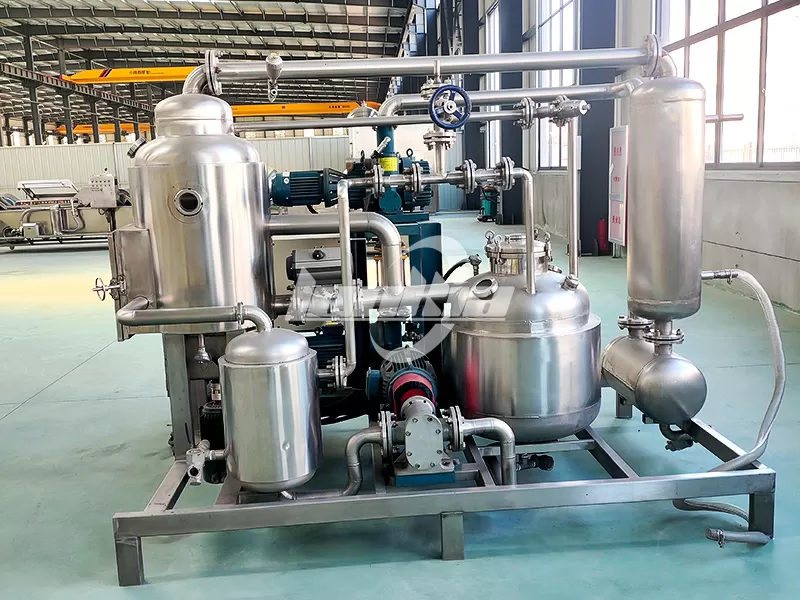
The oil system is another critical aspect that must not be overlooked when testing a vacuum fryer. The vacuum frying machine for fruit and vegetable chips should be capable of maintaining oil circulation and reducing impurities generated during production through a filtration system. LONKIA vacuum fryers are equipped with oil circulation, filtration, and de-oiling systems, enabling de-oiling treatment after frying.
Don't just look at whether the finished product is crispy; you should also compare the product's condition before and after de-oiling to check for issues such as visible oil residue, excess oil, or product breakage. For fruit chips, a proper de-oiling process helps ensure more consistent product quality.
Record actual production data for each batch
A test run should not be limited to taking a few photos of the finished product. It is recommended that the supplier provide complete test data, including:
Raw material weight → Batch loading quantity → Frying temperature → Vacuum level → Frying time → De-oiling time → Finished product weight
Using this data, you can further calculate the actual yield and production capacity per unit of time, rather than judging production capacity solely based on the vacuum deep fryer's theoretical capacity.
Test the Vacuum Fryer's Ability to Adjust Parameters for Different Products
If a vacuum fryer is intended to process multiple products, different raw materials should be tested separately. Fruits such as bananas and mangoes have different processing characteristics than root and tuber products like sweet potatoes and Chinese yams, so the corresponding temperature, time, and vacuum parameters must be adjusted.
A vacuum fryer suitable for producing a variety of products should be able to establish corresponding processing parameters based on different recipes, ensuring a stable operating process even after a product changeover.
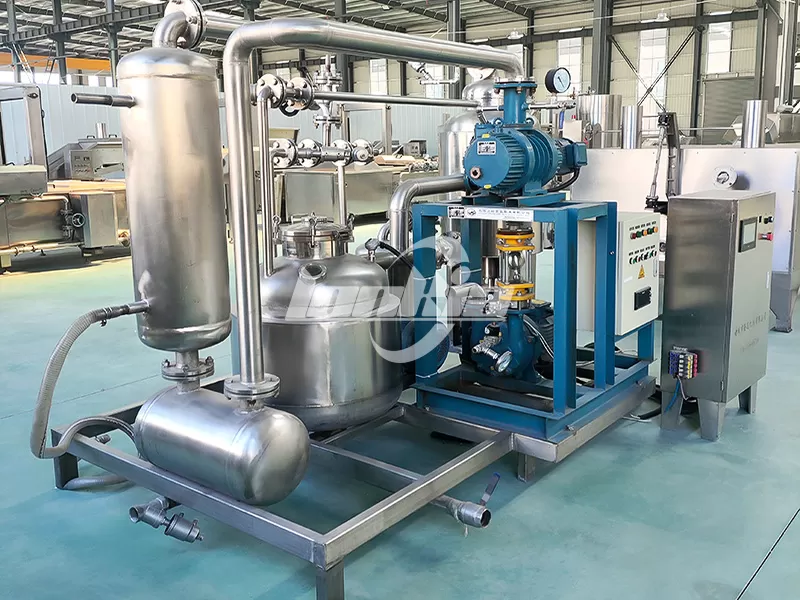
What Other Machine Configurations Should Be Checked Before Purchasing?
In addition to the quality of the finished product, it is recommended to focus on verifying the following:
- Vacuum pump and vacuum system
- Heating Method and Temperature Control
- Oil Circulation and Filtration System
- Oil-Draining Mechanism
- PLC Control System
- Food-Grade Stainless Steel Contact Parts
- Safety Protections and Emergency Stop Functions
- Cleaning and Maintenance Methods
LONKIA vacuum fryers feature a food-grade stainless steel construction and integrate functions such as heating, frying, oil storage, oil draining, and filtration into a single system. They can be configured to meet specific customer requirements based on raw materials and production needs.
Conclusion
A suitable vacuum fryer should not be evaluated based solely on price and rated capacity. The true test of value is to have the equipment process your raw materials through the entire production cycle while verifying the vacuum level, oil temperature, frying time, oil drainage, filtration, finished product quality, and actual production capacity. After confirming these data points, comparing equipment configurations, technical support, and after-sales service will lead to a more reliable purchasing decision.