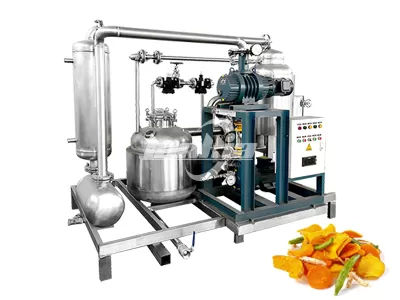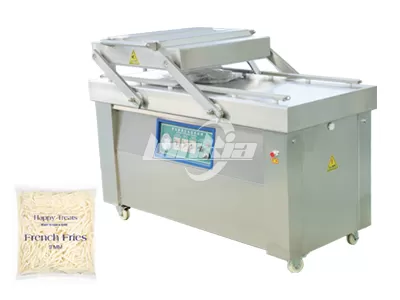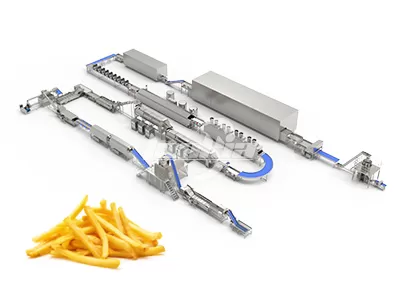
When building a French fries processing plant, oil consumption is one of the operating costs customers care most about. However, a French fries fryer's rated oil capacity does not match actual hourly oil consumption. Actual oil consumption depends on the condition of the potato raw material, the effectiveness of pretreatment, frying temperature, frying time, equipment design, and production load. Therefore, when planning a French fries processing line, estimates should be based on the entire equipment's process flow rather than focusing solely on the continuous fryer's specifications.
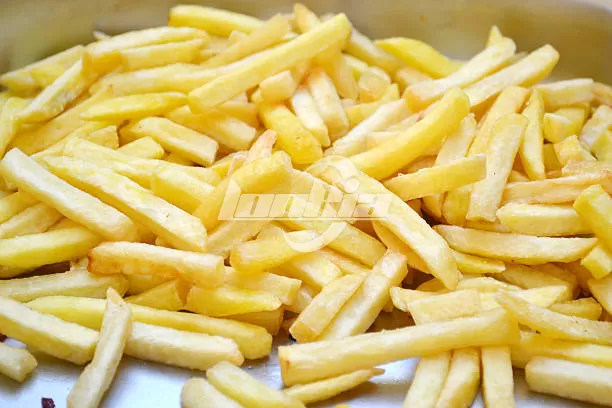
What Affects Oil Consumption in a French Fries Processing Plant?
1. The Effectiveness of Dehydration Directly Affects Oil Consumption During Frying
After blanching, French fries retain a significant amount of moisture on their surface. If they enter the fryer directly, this not only increases moisture evaporation during the frying process but also leads to oil splatter and affects frying stability.
Therefore, French fries processing plants typically include dehydration or air-drying equipment after blanching to quickly remove surface moisture from the French fries. Effective dehydration helps stabilize the subsequent frying process and is a factor that cannot be overlooked when estimating actual oil consumption.
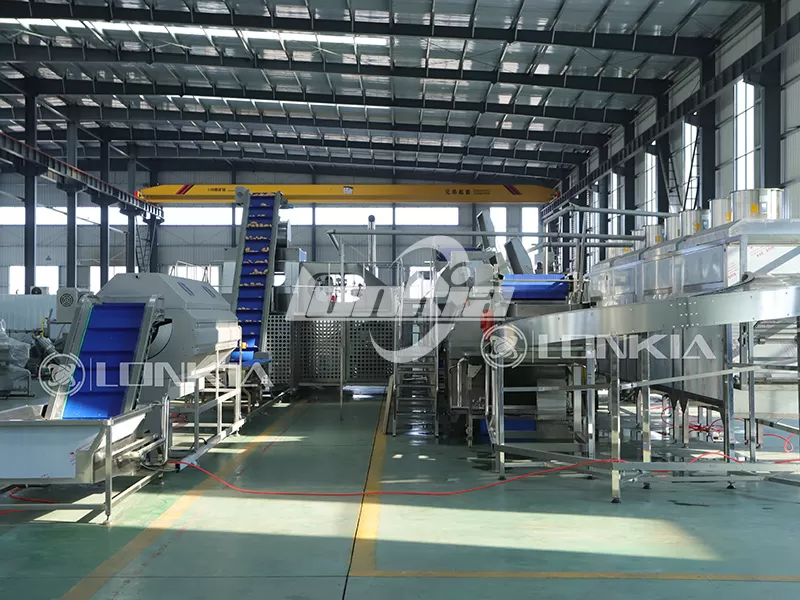
2. Frying Temperature and Time Affect Oil Consumption
Continuous fryers require appropriate frying temperatures and dwell times based on the French fries' specifications, feed rate, and product requirements. Excessive temperature fluctuations or improper frying times can affect the product's oil content and the frequency of oil replenishment.
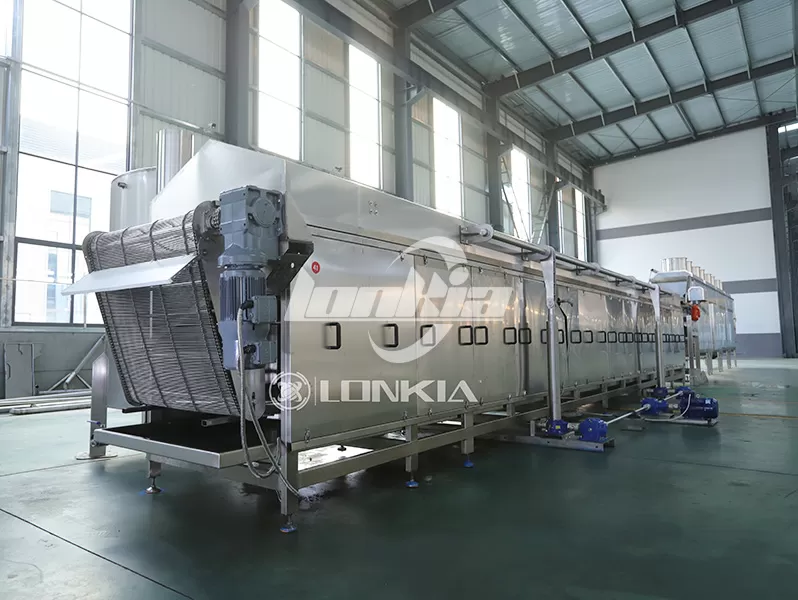
The LONKIA French fries fryer is equipped with temperature and time controls, enabling continuous frying according to production requirements and maintaining relatively stable processing conditions for the product.
How to Estimate Oil Consumption in a French Fries Processing Plant?
For actual calculations, start by establishing a basic formula:
Oil consumption per unit of product = Actual oil replenishment volume during a specific production period ÷ Finished product output during the same period
For example, continuously recording oil replenishment volumes and actual output over an 8-hour production period, then calculating the oil replenishment volume per metric ton of product, is more reliable than estimating based solely on the oil tank's capacity.
It is important to note that the initial oil volume in the tank is an equipment operating parameter, whereas the oil replenishment volume more closely reflects the actual operating consumption that customers need to calculate. Specific data must be tested and confirmed in conjunction with the potato variety, French fry specifications, moisture content, dehydration efficiency, and fryer configuration.
What Should Be Confirmed When Purchasing Frying Equipment?
When inquiring about a French fries processing plant, it is recommended to confirm the following with the equipment supplier:
- Frying temperature and control method
- Frying time and conveyor speed
- Effective oil tank capacity
- Rated processing capacity
- Pre-feeding dehydration method
- Oil filtration and recirculation method
- Required final oil content of French fries
- Recommended oil replenishment rate and test conditions
Summary
A French fries processing plant typically includes processes such as washing and peeling, cutting, blanching, dehydration, frying, oil drainage, quick-freezing, and packaging. Oil consumption is actually influenced by both preceding and subsequent processes, so the compatibility between equipment is equally important.
LONKIA can configure a complete French fries processing line based on target production capacity, French fry specifications, and process requirements, and provide corresponding equipment solutions for key stages such as frying, dehydration, and oil removal. By providing information on raw materials, target production capacity, and finished product specifications when requesting a quote, customers can receive a more tailored assessment of oil consumption and equipment parameters.