The final quality of potato chips depends not only on the raw potatoes and the slicing process, but also on the continuous fryer machine, which is a key piece of equipment that determines color, crispness, doneness, and oil content. If the oil temperature fluctuates, frying time is inconsistent, or the feed rate is uneven, the finished product may still exhibit issues such as uneven color, a soft texture, or localized overfrying—even if the quality of the sliced potatoes is consistent.
Therefore, in potato chip processing, properly setting the operating parameters of the continuous fryer and maintaining stable oil conditions are crucial steps in achieving a consistent final product.
Ensuring the Proper Condition of Potato Chips Before Entering the Continuous Fryer Machine
1. Maintain Consistent Slice Thickness
Variations in potato chip thickness directly affect frying time. Chips that are too thick may not have sufficient moisture removed from the interior, while chips that are too thin are more prone to rapid browning or even overfrying.
Therefore, before entering the continuous fryer machine, slice thickness should be kept as consistent as possible to allow subsequent equipment to use relatively uniform frying parameters.
2. Reduce Excess Surface Moisture
Excessive moisture on the surface of potato chips can destabilize the oil temperature and increase fluctuations during the frying process. Properly configuring pretreatment equipment—such as blanching, cooling, and dehydration systems—ensures that the potato chips enter the frying stage in a more stable condition.
Temperature and Time Are the Most Important Factors in Continuous Fryers
Precise Control of Oil Temperature
Oil temperature is a critical parameter affecting the color and texture of potato chips. During continuous frying, if the oil temperature drops too quickly, the potato chips may absorb more oil; if the temperature is too high in certain areas, the chips may become overly dark or even burn in spots.
LONKIA continuous fryer machines utilize a temperature control system to maintain the oil temperature within a set range and adjust operating parameters based on different products, thereby helping to improve the consistency of color and doneness for each batch of potato chips.
Properly Adjusting Frying Time
Frying time is closely related to the thickness of the potato chips, the condition of the raw material, and the desired texture. Continuous potato chips fryers can control the product's dwell time in the oil by adjusting conveyor operating parameters.
In actual production, it is not recommended to simply pursue higher operating speeds; instead, time parameters suitable for the current potato chip specifications should be determined through trial runs to ensure the product achieves the ideal crispness and color.
Maintaining Oil Cleanliness Is Equally Important
The frying process generates debris and residue. If these substances accumulate over time, they not only affect the condition of the oil but may also adhere to the surface of the potato chips, compromising the appearance of the finished product.
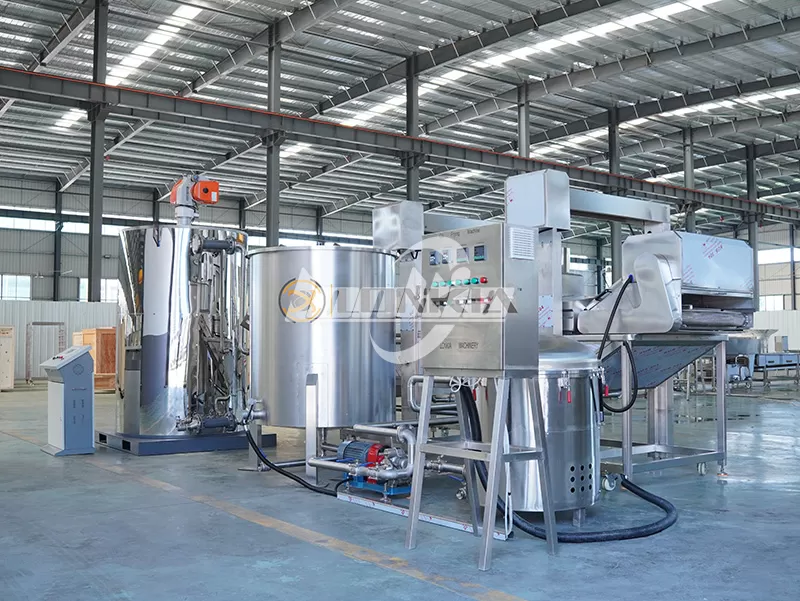
Continuous fryers incorporate oil-water separation and filtration systems to help remove residues generated during frying, thereby maintaining the oil in a relatively stable operating condition.
Align Equipment Parameters with Actual Output
If the feed rate does not match the continuous deep fryer's processing capacity, it can easily cause fluctuations in the load within the frying zone, which in turn affects temperature recovery and product consistency. Therefore, when selecting equipment, one should comprehensively consider the target output, potato chip specifications, frying time, and the processing capacities of both upstream and downstream equipment.
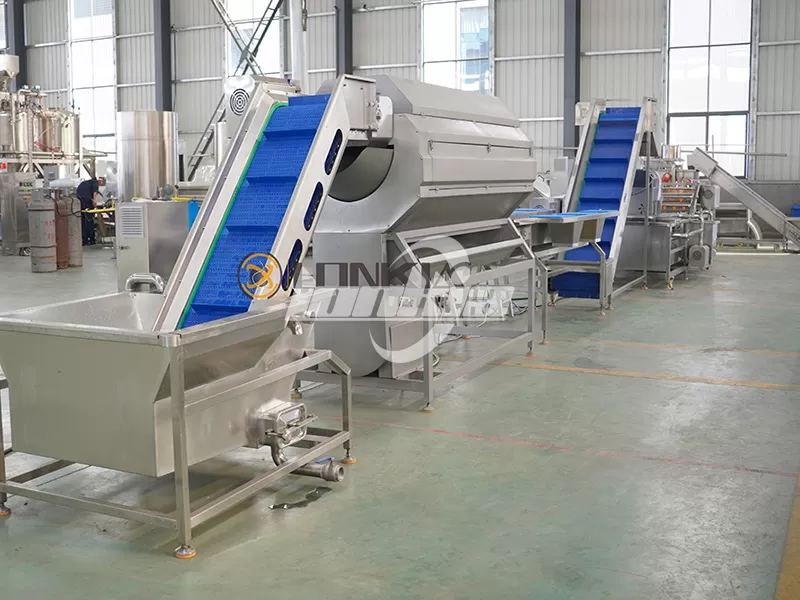
For potato chips processing lines requiring continuous production, LONKIA can configure equipment based on production capacity and production line layout, ensuring the continuous fryer integrates seamlessly with upstream processes—such as slicing, blanching, and dehydration—as well as downstream processes like oil drainage and seasoning.
Conclusion
To produce potato chips with uniform color and a crispy texture, the key lies not simply in raising the frying temperature, but in ensuring a proper balance among the raw material condition, oil temperature, frying time, oil filtration, and equipment capacity. For continuous production, a continuous fryer machine capable of stable temperature control, adjustable frying times, and continuous operation provides a more reliable equipment foundation for potato chip quality control.