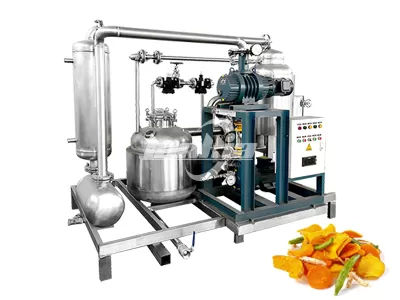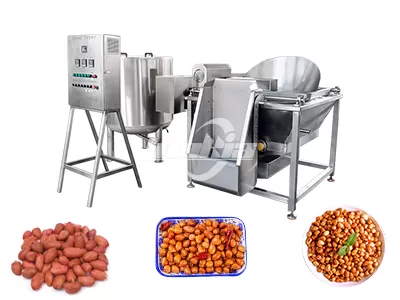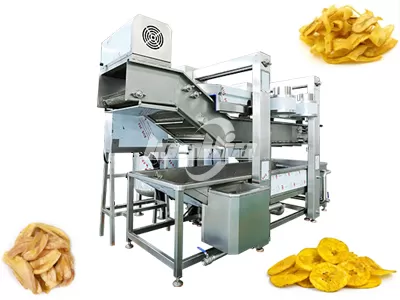
In the modern food processing industry, efficient and stable peanut oil fryers have become indispensable equipment for food enterprises. Unlike traditional manual deep-frying methods using open oil pots, peanut oil fryers employ industrial automation design to achieve advanced functions such as automatic temperature control, oil-water separation, and oil circulation filtration. This significantly enhances production efficiency and product consistency.
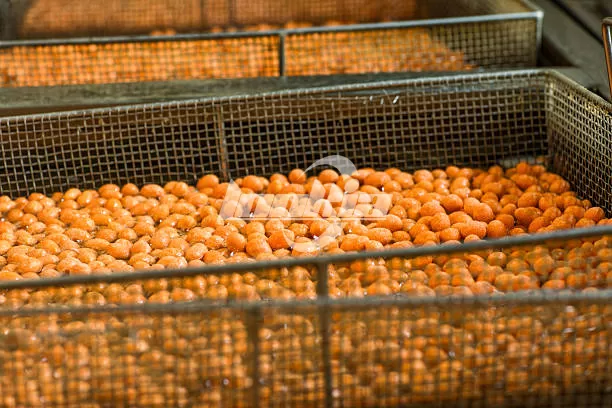
Limitations of Traditional Frying Methods
In many early or small-scale snack processing plants, traditional frying often relies on open oil pots or simple heating boilers. This approach presents several notable constraints:
- Significant Temperature Fluctuations: Manual adjustments to heat or cooking time make it difficult to maintain consistent oil temperatures, leading to substantial product quality variations.
- Rapid Oil Degradation: Unstable temperatures cause oil carbonization, with residues failing to settle effectively, necessitating frequent oil changes.
- High Labor Dependency: Production heavily relies on skilled operators' experience, limiting efficiency gains.
These issues directly impact production volume, product appearance/flavor, and overall costs. While traditional methods have low initial investment, they fall short in achieving scalable production and consistent quality.
Core Advantages of Peanut Oil Fryers
Compared to traditional methods, modern industrial peanut oil fryers feature innovative designs that effectively address these challenges:
1. Automated Temperature Control System
An advanced temperature control system continuously monitors and automatically adjusts heating power, ensuring oil temperature remains consistently at the set level. This delivers uniform and superior frying results. Minimal oil temperature fluctuations also reduce uneven frying and improve yield rates.
2. Oil-Water Separation Design
Unlike traditional fryers, modern groundnut frying machines employ an oil-water separation structure: frying residues sink into the water, preventing carbonization in the oil. This not only extends oil lifespan but also significantly reduces oil consumption and cleaning frequency, effectively lowering production costs.
3. Stable Automated Control
Systems like automatic discharge, automatic lifting, and oil circulation filtration make the entire equipment easy to operate, highly efficient, and stable. This is particularly crucial for daily high-intensity production, minimizing manual labor while reducing human error.
4. Food-Grade Stainless Steel Construction
High-quality peanut oil deep fryers are constructed entirely from food-grade stainless steel, offering corrosion resistance, easy cleaning, and compliance with food safety standards. Compared to traditional equipment, they are easier to maintain, promoting long-term stable operation.
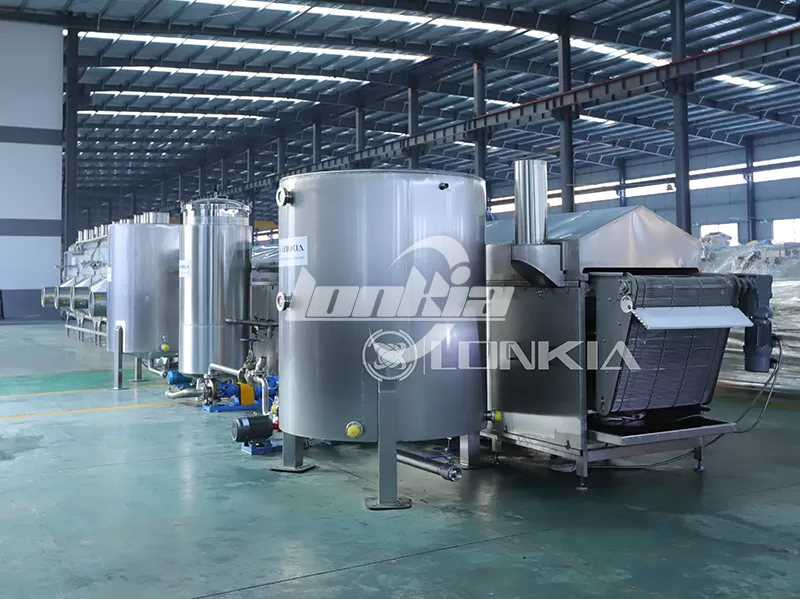
Comparison: Traditional Frying vs Peanut Oil Fryer
| Feature | Traditional Frying Method | Peanut Oil Fryer |
| Temperature Control | Manual, unstable | Automatic, precise ±2°C |
| Oil Life | Short, prone to carbonization | Extended, with oil‑water separation |
| Labor Requirement | High | Low, automated operation |
| Product Consistency | Variable | Stable and uniform |
| Heating Method | Open flame or simple electric | Electric or gas heating with uniform heat distribution |
| Capacity per Batch | Limited | Adjustable, from 100 kg/h to 1000 kg/h (depending on model) |
| Safety | Dependent on operator | Built‑in safety features (emergency stop, overheat protection) |
A comparison clearly shows that modern groundnut frying machines not only offer significant advantages in product quality but also save businesses time and production costs, making them essential equipment for achieving efficient, scalable processing.
How Should Customers Select Suitable Peanut Frying Equipment?
For food processing plants, choosing the right continuous frying equipment translates to higher efficiency, lower waste, and more consistent product quality. Beyond production capacity and automation levels, consider these factors during selection:
- Temperature Control Stability: Maintaining consistent oil temperature is paramount.
- Oil filtration and cleaning efficiency: The quality of the filtration system directly impacts oil lifespan.
- Ease of operation: Simple controls help reduce training costs.
- After-sales service and customization support: Reputable manufacturers offer professional advice and tailored solutions.
As a specialized food machinery manufacturer, Lonkia provides multiple models of industrial peanut frying machines. These can be configured according to enterprise production capacity requirements and process flows, helping customers achieve stable and efficient frying production lines.
Conclusion
Compared to traditional frying methods, peanut oil fryers not only enhance frying consistency and production efficiency but also help businesses reduce operating costs through automation and intelligent control. For food processing plants prioritizing output and quality, selecting such equipment has become a critical step in boosting competitiveness.