In today's competitive frozen food market, an efficient, stable, and low-fault-rate frozen vegetables processing plant is crucial for manufacturers to achieve high output and premium product quality. However, many enterprises discover persistent issues such as low equipment efficiency, significant production bottlenecks, raw material wastage, and high energy consumption after commencing actual production. This article will thoroughly analyse core methodologies for optimising frozen vegetable processing plant workflows, assisting clients in addressing practical challenges with targeted solutions.
Understanding Optimisation Goals Through the Holistic Process
A complete frozen vegetable processing plant typically encompasses the following key stages: raw material pre-treatment (selection & washing), cutting, blanching/parboiling, cooling, IQF rapid freezing, sorting, and packaging. Each stage directly impacts the efficiency of subsequent steps and the final product quality. The rational integration of the entire process forms the foundation for ensuring efficient production line operation.
Optimisation objectives should encompass:
- Reducing logistics and dwell times: Minimising transport distances and holding times between equipment stages;
- Balancing equipment capacity: Ensuring processing capabilities align across stages to prevent bottleneck congestion;
- Maintaining product consistency: Controlling processing parameters to guarantee batch-to-batch quality stability.
Optimal Configuration of Key Equipment
Within frozen vegetables production lines, the performance of each critical piece of equipment directly impacts overall efficiency:
1. Washing System
High-efficiency vegetable washing equipment should incorporate multi-angle spray and bubble cleaning functions to thoroughly remove soil and impurities without damaging the produce. Conveyor speed and cleaning intensity must be coordinated with subsequent cutting stages to prevent material accumulation.
2. Cutting and Blanching Equipment
Vegetable cutting machines must achieve uniform sizing; otherwise, inconsistent dimensions during subsequent blanching will cause nutritional loss or textural variations. Precise temperature and time control in blanching machines stabilises final product quality.
3. Cooling and IQF Quick-Freezing Systems
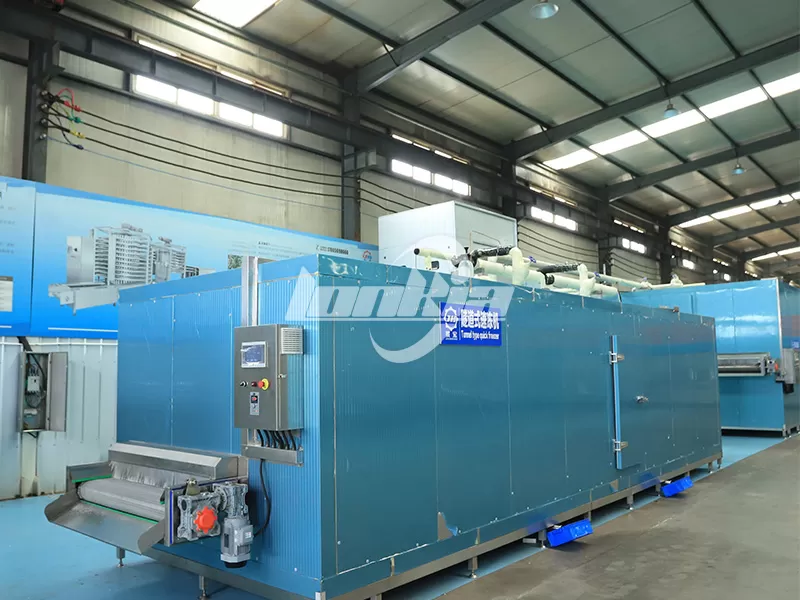
Rapid cooling is pivotal for preserving vegetable texture, serving as an indispensable step between blanching and freezing. The IQF freezer constitutes the core equipment of the entire production line. It achieves rapid crystallisation through efficient airflow and optimised freezing pathways, thereby maintaining vegetable colour, texture, and nutritional value. High-quality IQF equipment significantly reduces freezing time, enhancing both production capacity and consistency.
Equipment Compatibility and Process Integration
Optimising workflow hinges not only on individual equipment performance but also on seamless integration between units. For instance, conveyor belts between washing and cutting equipment must operate smoothly with synchronised speeds to prevent logistical bottlenecks or idle time, thereby maintaining overall line efficiency. Production line design should match each section's capacity to unit time output, minimising downtime due to faults and enhancing operational stability.
Automated Control Enhances Efficiency
Automation is central to boosting frozen vegetables processing plant efficiency. Automated feeding, speed control, and PLC centralised control systems reduce manual intervention, lower human error rates, and enhance line stability. Automated controls also trigger timely alerts during anomalies, safeguarding equipment and raw materials.
For clients, selecting production lines with robust automation systems reduces production costs while improving consistency and product quality.
Preventive Maintenance and Operator Training
All mechanical equipment experiences wear during prolonged operation. Unlike traditional machinery, modern frozen vegetable processing plants (such as those employing IQF freezing systems) require regular maintenance of critical components including conveyor belts, motors, freezing systems, and control panels. Establishing formal maintenance schedules and inspection protocols effectively minimises unplanned downtime, extends equipment lifespan, and reduces repair costs.
Furthermore, providing systematic training to operators enables staff to master equipment operation procedures, troubleshooting methods, and safety protocols. This reduces errors during daily production and enhances overall efficiency.
Summary
Optimising frozen vegetable processing plant workflows hinges on rationally organising equipment, scientifically matching production capacity, enhancing automation levels, and strengthening maintenance alongside team training. These measures not only boost production efficiency but also stabilise product quality while reducing waste and operational costs. When selecting equipment, prioritising performance metrics, the manufacturer's proven experience, and service support constitutes a vital safeguard for clients seeking long-term, stable production.