The price of a potato chip seasoning machine depends not only on the equipment model but also on processing capacity, seasoning method, discharge configuration, and automation features. When selecting equipment, potato chip manufacturers must consider seasoning effectiveness, production pace, and actual operational needs. Understanding the key parameters that affect pricing helps clarify the procurement budget and avoid under-specification or unnecessary costs associated with redundant features.
Equipment Type and Processing Capacity Affect the Base Price
1. Octagonal Seasoning Machines vs. Drum Seasoning Machines
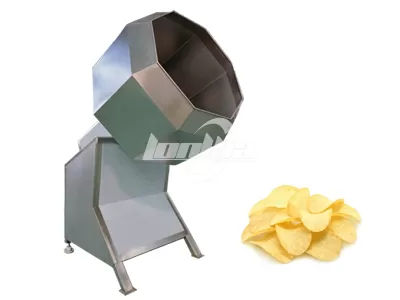
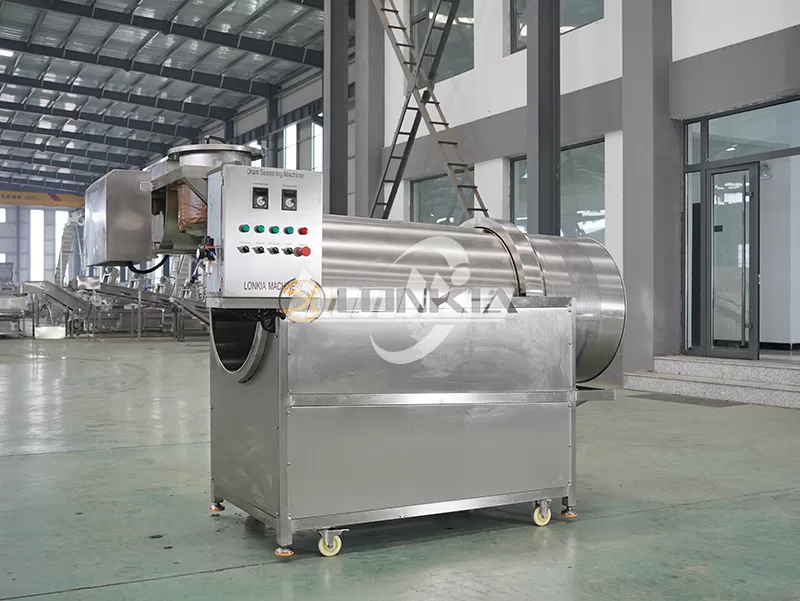
Octagonal seasoning machines season the product by tumbling the material; common configurations include manual or automatic discharge, as well as single-head or double-head designs. Drum seasoning machines, on the other hand, achieve continuous seasoning through drum rotation, with the rotation speed adjustable according to production requirements. Since the two machine types differ in structure and operating methods, their prices will also vary.
If a factory primarily engages in batch production and frequent flavor changes, an octagonal seasoning machine should be prioritized; if continuous integration with fryers and conveyors is required, a drum seasoning machine should be considered. The specific choice should be determined based on actual output and production processes.
2. Processing Capacity and Equipment Dimensions
The potato chip seasoning machine's processing capacity affects the drum size, feed mechanism, and drive configuration. When purchasing, clearly define the weight of potato chips to be seasoned per hour, as well as whether the equipment will operate in batch or continuous mode.
For a continuous potato chips making plant, it is also necessary to confirm that the seasoning machine can match the fryer's stable output rate. Simply pursuing a higher nominal capacity does not necessarily improve the efficiency of the entire production line.
Seasoning Methods and Automation Configuration
1. Powder, Liquid Seasoning, and Spraying Systems
Equipment designed solely for adding powdered seasoning differs in its feeding and spraying mechanisms from equipment that requires spraying oil, liquid seasonings, or handling both powders and liquids simultaneously. If a customer requires multiple seasoning methods, they should confirm in advance whether powder dispensers, liquid spray pumps, and related configurations are included in the quote.
For example, LONKIA's seasoning machine can process both liquid and powdered seasonings simultaneously, depending on the configuration. When purchasing, customers should provide actual recipes and seasoning requirements to confirm the equipment's suitability, rather than relying solely on the product name to determine functionality.
2. Discharge and Control Systems
Automatic discharge, variable-frequency speed control, and compatibility with conveying equipment all influence the equipment configuration. Customers should assess which features are truly necessary based on their operational workflow: if continuous integration with the packaging process is required, priority should be given to confirming discharge speed, conveying height, and control methods; if batch seasoning is the primary application, attention should be paid to the convenience of loading, mixing, and unloading.
Materials, Customization, and Additional Costs
The materials, surface treatments, and structural design of food-contact parts affect cleaning and maintenance. Although the product page may state that the equipment features a 304 stainless steel structure, you should still confirm the specific material specifications and configuration for the model you are purchasing.
Additionally, special voltages, adjustments to equipment dimensions, customized feed and discharge structures, and conveyors may all increase the quoted price. When requesting a potato chip seasoning machine quote, ask the supplier to itemize the cost ranges for the equipment itself, optional components, and transportation and installation services to facilitate comparison of different proposals.
How to Obtain a More Accurate Quote for a Potato Chip Seasoning Machine?
Before requesting a quote from suppliers, it is recommended to prepare the following information:
- Potato chip variety and hourly processing capacity;
- Whether batch flavoring or continuous production will be used;
- Flavoring type: powder, liquid, or a combination of both;
- Required discharge method, speed adjustment, and conveyor configuration;
- Factory voltage, frequency, and on-site installation conditions.
A sound equipment procurement process involves more than just comparing initial prices; it also requires confirming that the configuration meets actual production requirements. Providing clear product and process information enables suppliers to offer more accurate model recommendations and quotes. LONKIA provides equipment selection and configuration consulting based on customers' potato chip processing needs to help them define their procurement plans.
Conclusion
The cost of a potato chip seasoning machine is influenced by machine type, capacity, automation, materials, and customized configurations. Rather than simply seeking the lowest-priced equipment, it is better to first clarify actual production needs and then verify equipment parameters and delivery details item by item. Selecting equipment with a reasonable configuration, seasoning performance that meets requirements, and ease of maintenance is the best way to ensure long-term operational needs for potato chip production are met.