When purchasing an industrial bubble washing machine, in addition to considering the equipment price, processing capacity, and cleaning performance, production cycles and delivery times are equally important. For customers planning to build a fruit and vegetable processing production line, whether the equipment can be delivered on time directly affects subsequent installation, commissioning, and production scheduling.
So, what steps are involved in the process of a bubble washing machine, from order placement to shipment? What are the differences in delivery cycles between standard and custom equipment? And what should be confirmed before making a purchase? Understanding the following information will help customers plan their procurement effectively and minimize unnecessary delays.
What Steps Are Involved in the Production and Shipment of a Bubble Washing Machine?
The delivery of a bubble washing machine is not simply a matter of assembling and packing the equipment; it involves multiple stages, including technical confirmation, manufacturing, equipment testing, and export packaging.
1. Confirmation of Technical Parameters and Equipment Configuration
Upon receiving a customer's inquiry, the first step is to confirm the actual operational requirements of the equipment, including:
- The types and raw material states of the items to be washed;
- Planned hourly processing capacity;
- Cleaning effectiveness and process requirements;
- Equipment dimensions and conveyor belt width;
- Voltage, frequency, and electrical configuration;
- Whether a water recirculation system or other optional features are required.
This information directly influences the equipment model and production plan. The more thorough the initial confirmation, the more likely it is to avoid delivery delays caused by parameter changes during production.
2. Equipment Manufacturing and Component Assembly
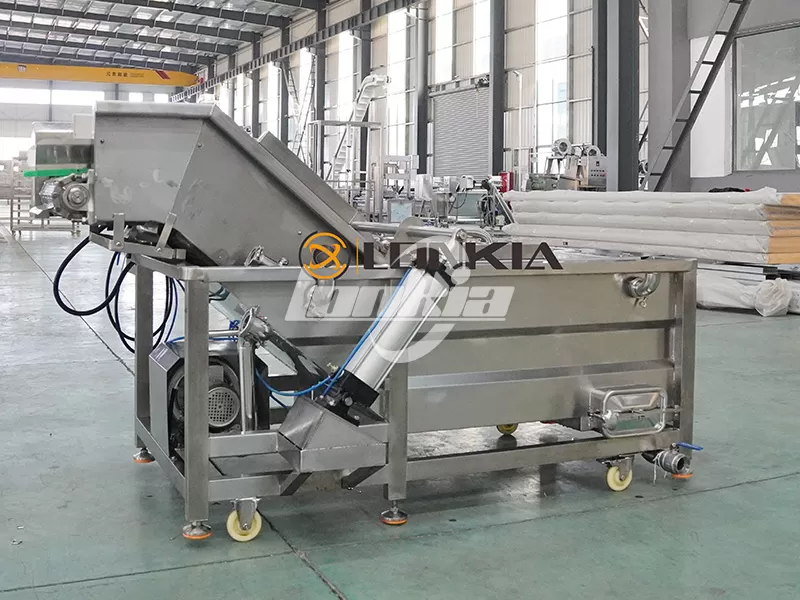
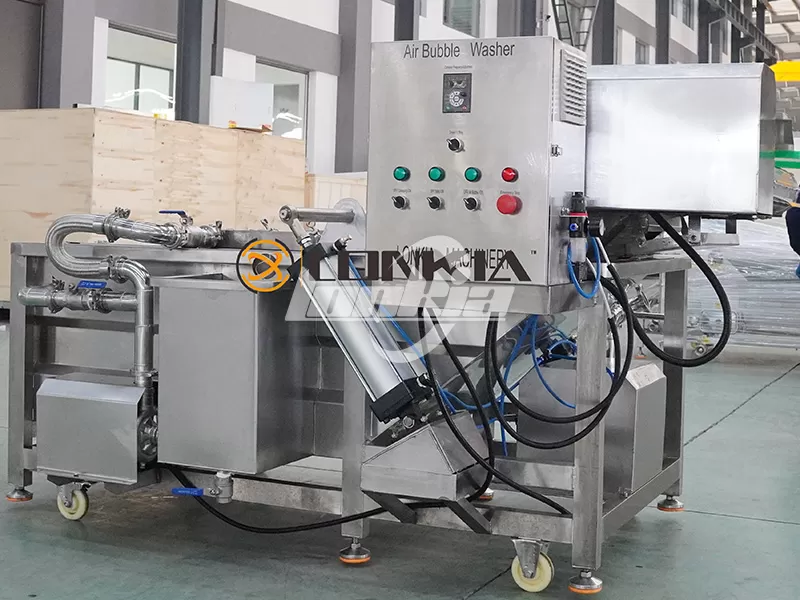
Once the technical solution is confirmed, the equipment enters the production phase. The manufacturing of bubble washers primarily involves the fabrication and assembly of the frame, tank, conveyor mesh belt, bubble generation system, and electrical control components.
Taking the LONKIA bubble washer as an example, the equipment is primarily constructed from SUS304 stainless steel, with the conveyor section utilizing a stainless steel mesh belt. Different models vary in terms of mesh belt width, equipment dimensions, and power configuration, and production must be organized in accordance with the final confirmed technical specifications.
3. Complete Unit Testing and Quality Inspection
Once the bubble washing equipment is fully assembled, it is necessary to inspect the operation of the conveyor system, the bubble generation performance, the electrical controls, and the connections between all components.
For fruit and vegetable washing equipment, attention should also be paid to whether the conveyor belt runs smoothly and whether the washing process meets the requirements of the produce. Customers can confirm with the manufacturer in advance whether trial runs are supported and whether equipment operation documentation can be provided.
What Factors Affect the Delivery Timeframe of a Bubble Washer?
1. Standard Model vs. Custom Configuration
Standard models can typically be scheduled for production based on existing equipment designs, whereas custom equipment may involve dimensional adjustments, modifications to the feed and discharge structures, or special functional configurations, thus requiring additional design and manufacturing time.
2. Equipment Configuration and Technical Requirements
Factors such as mesh belt width, equipment length, motor configuration, and the water circulation system all affect production scheduling. If a customer makes last-minute changes to technical parameters during the production process, this may also extend the delivery time.
3. Production Scheduling and Order Confirmation Timing
The preparation of raw materials, the scheduling of existing orders, and the speed at which the customer confirms technical documents also affect actual production progress. Therefore, we recommend that customers finalize their equipment requirements as early as possible before project initiation.
How to Avoid Equipment Delivery Delays?
To ensure smoother procurement and production planning, we recommend that customers complete the following preparations before placing an order:
- Provide the types of materials, processing capacity, and cleaning requirements in advance to avoid repeated revisions to the design.
- Confirm the equipment model, dimensions, electrical parameters, and optional configurations.
- Clearly specify the production cycle, estimated shipping date, and delivery terms in the contract.
- Confirm factory space, utility connections (water and electricity), and installation conditions in advance.
- Maintain communication with the manufacturer to stay informed about production progress and shipping arrangements.
Choosing a Reliable Bubble Washing Machine Manufacturer
Equipment delivery depends not only on production speed but is also closely related to the manufacturer's technical communication, manufacturing capabilities, and quality inspection processes.
LONKIA offers a wide range of fruit and vegetable bubble washing equipment and can configure solutions tailored to different materials, processing capacities, and production process requirements. Before purchasing, customers can provide images of raw materials, target production capacity, and factory layout to further confirm equipment specifications and delivery arrangements.
If you are looking to purchase a bubble washing machine, please feel free to contact LONKIA. Provide us with your material types, hourly processing capacity, and destination, and we can recommend suitable equipment configurations based on your actual needs, as well as confirm the quote, production lead time, and shipping arrangements.