The crispness of banana chips not only affects the consumer's eating experience but also impacts product quality, packaging appearance, and production stability. For banana chip processing plants, if some chips in the same batch are too soft while others are too hard, or if the texture varies across different batches, it often indicates that the frying process requires further adjustment.
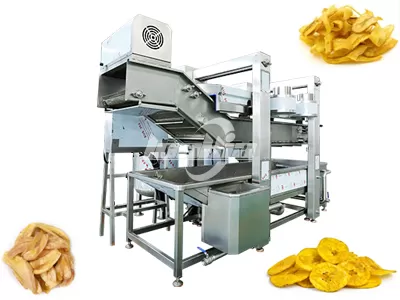
The role of a banana chips frying machine is not limited to frying; it also helps processors establish stable production conditions through temperature control, conveyor speed adjustment, and heat management within the oil tank. To improve the crispness of the finished product, one must address both the equipment's operating parameters and the processing characteristics of the banana chips themselves.
What Factors Contribute to Inconsistent Crispness in Banana Chips?
After frying, banana chips must achieve the appropriate moisture content and texture. If the finished product is too soft, has a hard texture, or exhibits inconsistent crispness, it is typically related to the following factors.
1. Inconsistent Thickness of Banana Chips
Slice thickness directly affects heat transfer and moisture removal. Banana chips of different thicknesses may exhibit varying degrees of doneness even when fried for the same amount of time.
If some slices are too thick, moisture inside may not be fully removed; if slices are too thin, they may be more prone to issues such as excessive browning or an overly hard texture. Therefore, before frying, check the condition of the slicer's blades and the uniformity of the slices to ensure the raw materials are as consistent as possible.
2. Oil Temperature Fluctuations Affect Frying Results
When the oil temperature is too low, banana slices may take longer to achieve the desired texture; when the oil temperature is too high, the surface may darken while the interior may not be processed properly.
During continuous feeding, raw materials entering the oil tank draw away some heat. If the heating system cannot promptly restore the set temperature, processing results may vary between batches.
3. Mismatch Between Frying Time and Raw Material Conditions
The ripeness, moisture content, and slice specifications of bananas all affect actual frying requirements. The same temperature and time settings may not necessarily apply to all raw materials.
Processors should determine the appropriate temperature and dwell time through test frying, taking into account the actual condition of the bananas.
How Do Banana Chip Fryers Help Stabilize the Texture of the Final Product?
To improve crispness, the equipment must provide relatively stable and adjustable processing conditions.
1. Temperature Control and Heating Capacity
The banana chips frying machine should be equipped with a temperature control system suitable for production needs. Operators can set the oil temperature based on the specifications of the banana slices and the results of test frying, while monitoring temperature fluctuations during continuous production.
When selecting equipment, attention should also be paid to whether the heating capacity matches the actual feed rate, as well as the equipment's ability to maintain temperature stability during continuous feeding.
2. Conveyor Speed Adjustment
Continuous banana chips fryers feed the product into the oil tank via a conveyor system. The conveyor speed affects the residence time of the banana chips in the oil.
When the finished product is too soft, evaluate whether the conveyor speed needs adjustment by considering the oil temperature, slice thickness, and raw material condition. After making adjustments, re-examine the color, texture, and processing uniformity of the finished product to avoid changing only one parameter while neglecting other factors.
3. Oil Tank and Oil Circulation Design
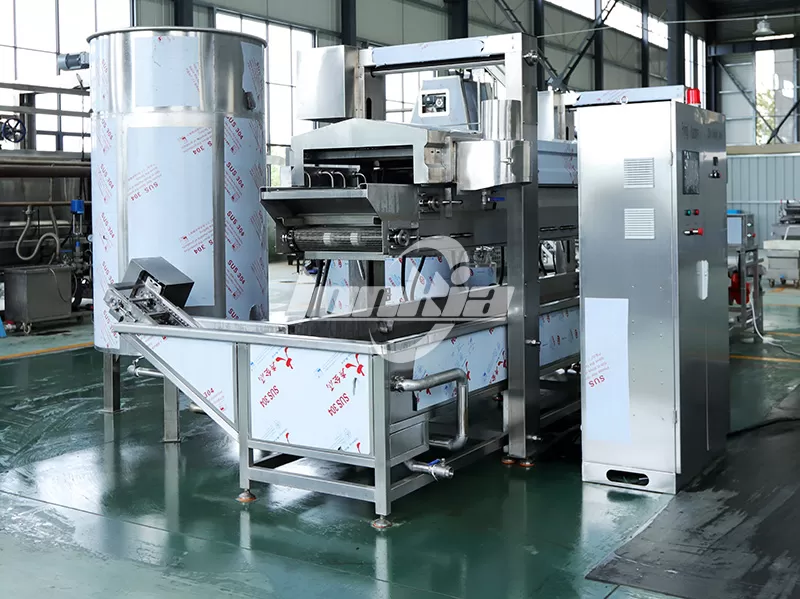
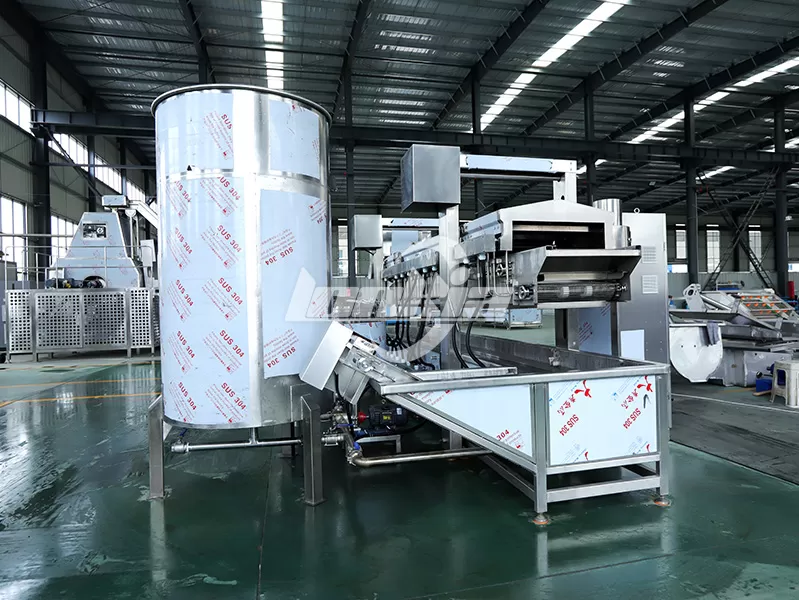
The temperature distribution within the oil tank and the flow characteristics of the oil also affect processing results. Proper oil circulation helps improve heat distribution in the oil and reduces localized temperature variations. Lonkia banana chips frying machines can be configured to meet production needs by optimizing temperature control, conveying, and frying mechanisms.
How to Determine the Appropriate Processing Parameters Through Test Frying?
Before commencing full-scale production, it is recommended to conduct test frying using actual banana raw materials and maintain a record of the parameters.
- Record raw material specifications: Including banana ripeness, slice thickness, and feed condition.
- Record equipment parameters: Including oil temperature settings, actual temperature fluctuations, and conveyor speed.
- Inspect the finished product: Observe color, crispness, hardness, and consistency across different parts of the product.
- Make gradual adjustments: Focus on adjusting one parameter at a time, then compare the resulting changes in the finished product to gradually determine the processing conditions best suited for the current raw materials.
After the banana slices are removed from the oil, pay close attention to the oil-draining and cooling stages. If the product is not sufficiently cooled before packaging, residual heat may cause moisture to condense inside the packaging, affecting the crisp texture during storage. Therefore, the plantain chips frying machine's discharge mechanism should be properly coordinated with subsequent processing steps.
Summary
When purchasing a banana chips frying machine, in addition to rated production capacity, it is essential to thoroughly understand the temperature control system, the adjustable range of conveyor speed, the oil circulation structure, cleaning and maintenance procedures, as well as the compatibility of the equipment with slicers, oil-draining, and cooling equipment.
For processors seeking to produce consistently crisp banana chips, it is recommended to clearly define product thickness, target output, and finished product requirements before purchasing equipment, and to coordinate with suppliers to conduct test frying using actual raw materials. By combining equipment parameters with processing techniques, it is possible to more effectively minimize texture fluctuations and establish a stable production process tailored to your specific product.