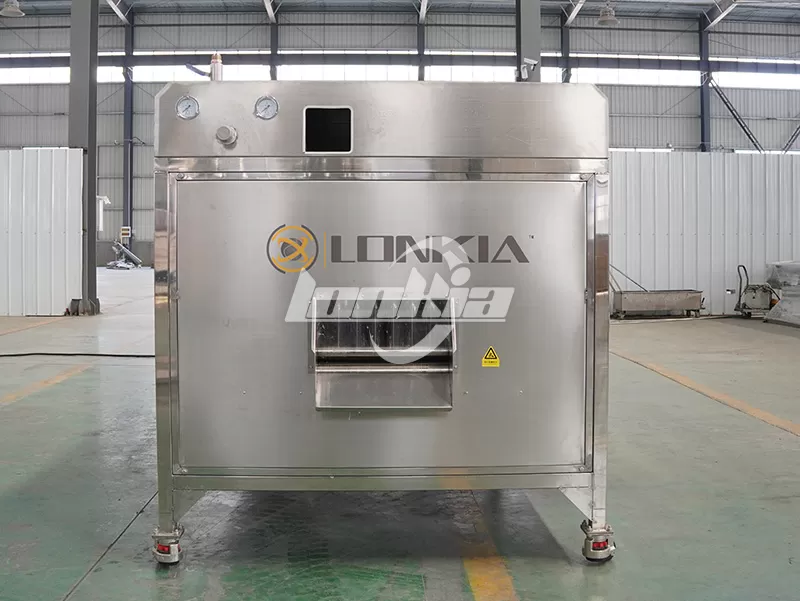
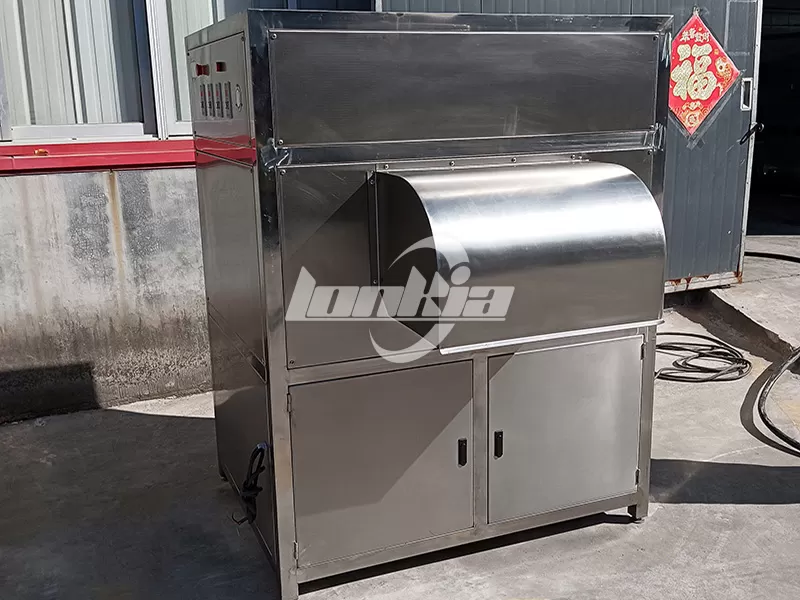
Industrial onion peeling machines are essential equipment for dicing, slicing, and other value-added processing steps involving onions. In actual production, customers are most concerned about whether the peeling is thorough, whether the onions are damaged, whether the machine operates stably, and how quickly issues can be resolved when they arise. Therefore, when selecting automatic onion peeler, it is important to consider not only processing capacity but also the peeling method, parameter adjustments, and the machine's design. The LONKIA industrial onion peeler uses high-pressure air to remove the outer skin of onions, and the process is completed within a sealed peeling chamber, which helps minimize damage to the onion's interior.
Potential Issues with Industrial Onion Peeling Machines
1. What should I do if the onions are not peeled thoroughly?
Incomplete peeling is a relatively common issue in actual processing. First, check whether there are significant variations in onion size, variety, or raw material condition. Second, confirm that the machine's peeling parameters are properly matched to the current raw material.
Industrial onion peeling machines use high-pressure airflow to loosen and remove the outer skin, rather than relying on extensive mechanical friction. The equipment allows for adjustment of the number of layers to be peeled, which can be set according to different specifications and processing requirements. If some outer skin remains, you should first check the parameter settings and the consistency of the raw material, rather than simply increasing the processing intensity.
2. What should be done if there is significant damage to the onions after peeling?
For onion processing companies, the peeling process should preserve the integrity of the onions as much as possible. If significant damage occurs after peeling, check whether the peeling parameters are set too high and whether the equipment has been properly adjusted for the current onion specifications.
The advantage of high-pressure air peeling lies in using airflow to act on the outer skin, completing the peeling process within a sealed chamber, thereby minimizing the impact of direct mechanical force on the onion's interior. Properly adjusting the number of peeling layers can achieve a better balance between peeling integrity and product protection.
3. What should be done if processing results are inconsistent during equipment operation?
If peeling results vary significantly within the same batch of raw material, investigate three areas: raw material specifications, equipment parameters, and operating conditions. When there are significant variations in onion size, using uniform parameters may not achieve the desired results; additionally, the equipment must maintain a stable operating state throughout the process.
It is crucial to conduct raw material testing before starting formal production. Determining parameters based on actual onion sizes and target peeling results before proceeding to continuous processing can reduce the need for repeated equipment adjustments during production.
4. What should be done if cleaning and maintaining the onion peeler is difficult?
Food processing equipment requires frequent cleaning, so the simplicity of the equipment's design is also an important consideration during procurement. After using the peeler, focus on cleaning the peeling chamber and material-contact areas, promptly remove any residual onion skins, and inspect relevant components according to the equipment's specifications.
The LONKIA industrial onion peeler features a stainless steel construction and an easy-to-clean design, prioritizing daily cleaning and maintenance needs to ensure long-term, stable operation.
How Can You Minimize Common Issues with Industrial Onion Peeling Machines?
To maintain consistent peeling results, we recommend taking the following steps:
- Select and adjust peeling parameters based on the actual size of the onions;
- Conduct raw material testing before production to determine the appropriate number of peeling layers;
- Regularly inspect the equipment's operating status and key components;
- Promptly remove residue from the peeling chamber;
- Ensure the peeling machine's processing capacity matches that of downstream equipment, such as dicing and slicing machines.
For customers requiring further processing, the industrial onion peeling machine can also serve as a pre-processing unit in an onion processing production line, seamlessly integrating with subsequent processes such as dicing and slicing into rings. LONKIA currently offers related solutions such as the Onion Dice Production Line and the Onion Ring Machine Line.
Selecting the Right Industrial Onion Peeling Machine
The actual performance of an industrial onion peeling machine depends on the equipment's structure, peeling method, parameter adjustment capabilities, and adaptability to raw materials. When faced with issues such as incomplete peeling, product damage, or unstable operation, proper troubleshooting is more important than simply increasing the equipment's operating intensity.
If you are purchasing an industrial onion peeling machine, we recommend providing the equipment manufacturer with information on onion size, raw material type, target processing capacity, and final processing requirements. Only by matching and testing equipment based on actual processes can you obtain a configuration and quote that best suits your production needs. LONKIA can provide corresponding equipment solutions based on different onion specifications and processing requirements.